
Reuse Of Effluents
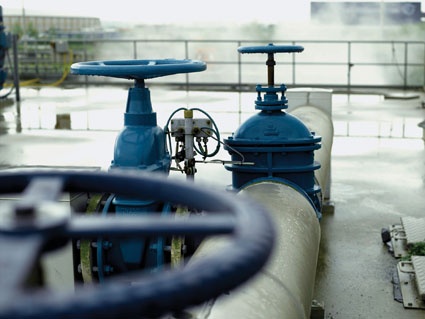
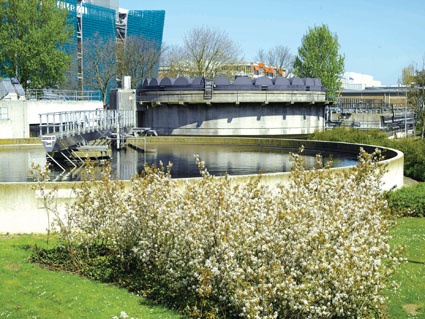
Circle of Life - Evides Industry Water owns and operates various water treatment plants in the Benelux and Germany, and the reuse of industrial and municipal effluent has been part of its routine. By using this experience, new applications are tested and new markets are being developed. Effluent from waste water treatment plants is in fact process water.
However different in terms of quality, this effluent can be reused for industrial or agricultural applications after a further polishing step. Moreover, it can also serve as a source for the production of any other quality of water after appropriate treatments. Various technologies are available that - depending on the application - can be combined for the treatment of effluent to high-quality, high-value water.
Over the past decades, Evides has gained a wealth of experience in the application of membrane technology and water treatment by ion exchange. In addition to the long-term experience being one of the leading drinking water suppliers of the Netherlands, this technological know-how enables the company to build and operate water treatment plants that are capable of turning effluent into a product pure enough for re-use.
Effluent To Demineralized Water
The biggest effluent reuse project in the Netherlands is at Dow Benelux (Terneuzen). As of February 2008, municipal effluent of the municipal wastewater treatment plant (WWTP) of the municipality of Terneuzen is being used as feed of the demineralization plant, consisting of a MF-RO process.
The effluent came to replace sea water as feed water, resulting in substantial reductions of energy and chemicals consumption. The demineralization plant produces demineralised water for supply to Dow Chemical. In a further optimization of the process and due to the fact that the MF pre-treatment needed replacement, at the end of 2010 high-quality final effluent will be fed directly on the RO plant.
This effluent will be produced by a 625 m3/hour MBR, that is nearing completion and will be put in operation around summer 2010. The MBR (using the airlift technology of Dutch manufacturer Norit) offers Evides the benefit of high-quality effluent while creating a compact extension of the biological treatment capacity of the municipal WWTP.
Another example of successful reuse of effluent is at Cargill's starch production plant in Sas van Gent (in the southern part of the Netherlands). Evides produces demineralized water to supply to Cargill, which is used as boiler feed water. Using effluent of Cargill's waste water treatment plant to substitute 600,000 m3/year of drinking water substantially reduces Cargill's purchase costs. With an incoming conductivity of almost 6,000 μS/cm, the effluent is treated by flocculants, micro-filtration and reverse osmosis.
Therefore, it is possible to produce demineralized water with a conductivity of <10 μS/cm. With a capacity of 70 m³/hour, this plant demonstrates the potential for drinking water substitution in a region almost devoid of fresh surface water, such as the delta region of southwest Holland. This application constitutes a good showcase for an ecological and economical win-win situation.
Pilot for Ground Water Refill and Irrigation
In the district of The Hague, Evides treats the household waste water of more than 1 million people. The municipal WWTP Harnaschpolder is the biggest municipal waste water treatment plant in The Netherlands and has been developed as part of a public private partnership (PPP). In cooperation with partners, Evides owns and is operating this plant as part of a 30 year concession contract.
This project is The Netherlands' largest PPP project in the field of household water treatment until now. Evides and its partners are responsible for design, construction, renovation and subsequent operation of two sewage treatment plants with a total capacity of 1.7 million population equivalents.
In January 2010, Evides (together with partners Public Water Board Delfland, Delfluent Services, Technical University of Delft, Veolia Water and Rossmark) has started a four-year pilot study at the Harnaschpolder plant that aims to upgrade effluent to a quality good enough for use of irrigation water in the Westland region, Europe's biggest greenhouse area. The region has a lack of fresh water. Intense desalination of brackish ground water has led to damages in the aquatic system. The pilot plant research is a first step to look into the opportunities of improving the quality of surface water by using upgraded municipal effluent. Additionally, the pilot plant research aims at producing highly reliable and safe irrigation water for use in greenhouses.
Reuse Seminar at the World Expo in Shanghai
Shortage of water resources is a bottle neck for industrial development. During the Holland Water Week (June 7-11) at the Shanghai World Expo, Evides will host the Chinese chemical industry on the topic "DBFO and Wastewater Reuse " on June 8. This seminar aims to share with leading Chinese companies and authorities some of Holland's best practices in innovative reuse technologies and the DBFO (design, build, finance, operate) approach for water services delivery for industrial reuse. The expertise of Evides with reuse of water can help to meet Chinese demand and which in turn can lead to large-scale business opportunities and joint research.
China has limited water resources which are both distributed unevenly and polluted to a high level. To sustain further strong industrial development in the arid north and northeastern areas of China, limitation of water use and maximization of water reuse are essential policies of the Chinese authorities. Large coal-based chemical industrial projects are being planned in these areas, which face substantial challenges due the lack of water. The reuse of both industrial and municipal effluent is a must and will contribute to China's aim at only allowing zero-discharge plants to be erected. Best practices of existing and new water treatment technologies are in need. Evides' full-scope experience with reuse of effluent in the chemical industry will be available to Chinese projects as of summer 2010.
Demonstration Plant For China
Due to start operation in May 2010, Evides will be using a demonstration plant with a capacity of 30 m3/hour to showcase a reuse process (DAF-UF-AC-RO) that aims at minimizing operating costs while maximizing operational reliability in a very harsh climate. Backed by funds from the Dutch government and constructed by Dow Water Solutions (DWS) near Shanghai, this demo plant will produce demineralized water from wastewater effluent and will ideally be employed at a number of sites with chemical companies in the dry north of China. These sites in the northern provinces of Ningxa, Shaanxi, Shanxi, Hebei, Liaoning, Inner Mongolia and Shandong will for the greater part produce chemicals on the basis of pit coal processing and have a need of substantial amounts of water.
These regions are known for their droughts and the limited availability of water. Reusing water from the effluent of wastewater treatment plants is not an option - in this case, it is a must. The scale of this demonstration plant is more than enough to be able to use the results for the upgrade to full-scale sized reuse plants. The first demo location is located in the north of the province of Shaanxi.
Company
Evides IndustriewasserPostfach 10 14 23
42014 Wuppertal
Germany


most read
20 Years of CHEManager International
Incredible but true: CHEManager International is celebrating its 20th anniversary!

Q1 2025 Chemical Industry: Diverging Trends
The first quarter of 2025 highlights a continued divergence between the European and US chemical industries.

Pharma 4.0 – the Key Enabler for Successful Digital Transformation in Pharma
Part 1: Building a Business Case for Pharma 4.0
Relocation of Chemicals Production Footprint in Full Swing
A new Horváth study based on interviews with CxOs of Europe’s top chemical corporations reveals: The majority of board members expects no or only weak growth for the current year.
ISPE Good Practice Guide: Validation 4.0
The Validation 4.0 Guide provides a comprehensive approach to ensuring product quality and patient safety throughout a pharmaceutical product's lifecycle.