You are here: HomeTopics OverviewArchive › NNE Pharmaplan Extends International Business with A New Structure

NNE Pharmaplan Extends International Business with A New Structure

Interview with Stefan Berg, General Manager of the Central Europe region, NNE Pharmaplan

Sep. 06, 2011
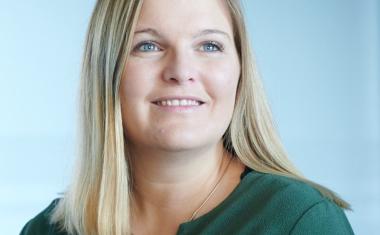
Stefan Berg, General Manager Central Europe, NNE Pharmaplan
Stefan Berg, General Manager Central Europe, NNE Pharmaplan more
Stefan Berg, General Manager Central Europe, NNE Pharmaplan  

Leading The Way - With sales of around €200 million in 2010, NNE Pharmaplan is one of the world's leading engineering and consulting companies for the pharmaceutical and biotechnology industries. Last year the group, whose headquarters are in Copenhagen, changed its organizational structure in order to improve its service to international customers and more consistently exploit opportunities for growth.

The subsidiaries in Germany, Switzerland and France are part of the Central Europe Region. The German headquarters is in Bad Homburg, near Frankfurt. Dr. Michael Reubold and Corinna Matz-Grund spoke to Stefan Berg, General Manager of the Central Europe region, about the current trends in the pharmaceutical market and the strategies with which the company intends to use these trends to achieve its growth targets.


CHEManager Europe: Mr. Berg, NNE Pharmaplan has reorganized itself in Europe. What were the reasons for this organizational change?


Stefan Berg: The organization we previously had was a structure that focused on the headquarters in Copenhagen and - for historical reasons - was orientated to serving our owner and largest customer Novo Nordisk with an emphasis on Scandinavia. We wanted to change our business processes to cater for the present situation, as we now have a much broader and more international base than in the past, and employ 1,600 people in 25 offices all over the world. In addition, the new structure is intended to promote further growth.


Can you be more specific?


Stefan Berg: The group now has a regional organizational structure consisting of five regions. With this, the five sub-organizations are better able to adapt to the particular regional requirements of their customers. We belong to the Central Europe region. The four other regions are Nordic, North America, China as an independent region and emerging markets with India and Russia.

The Nordic region includes Scandinavia and is a good example to explain the opportunities for growth.

The Scandinavian market is relatively small, and we have a market share of 80% there. On the basis of this situation, no further growth is possible. Things are completely different in the Central Europe region. We only have a small market share in this large market, although we are one of the world's leading providers of engineering services for the pharmaceutical, biotechnology and vaccine industries.

Here we have two effects which enable further growth: On the one hand we can expand our special market share and on the other hand we can also participate in the general growth of the market.


Have you set any targets for this growth?


Stefan Berg: We have a very ambitious target: We want to double our market share in the Central Europe region by 2014.


What is the importance of Central Europe within the group?


Stefan Berg: At present, Central Europe includes our offices in Germany, Switzerland and France with about 215 employees. These are countries with major pharmaceutical industries - our core target group. However, our market is much larger than just these three countries. We are responsible for all European countries except for those in Scandinavia, the former Soviet Union, plus the French-speaking states of North Africa.


Can you serve this large area from three subsidiaries?


Stefan Berg: No. At present we are considering how we wish to develop this market in the future, and there will be additional subsidiaries in other pharmaceutical centers. For example, we are now specifically considering setting up a branch in Belgium. After Belgium, a further location in France is conceivable.


The dominant topic in the pharmaceutical industry is the expiry of patents for major medications, which in many cases are not compensated for by adequately filled development pipelines for new products. There are also expensive and time-consuming registration procedures. Because of this, the pharmaceutical industry is increasingly relying on small biotechnology companies in order to make its research more successful and more efficient. What effect do these factors have on your business?


Stefan Berg: Usually, any kind of change brings us a great deal of work, not just new products, but also mergers of pharmaceutical companies. Restructuring of locations or the relocation of production, which automatically follow mergers, generate orders for the engineering sector.


What proportion of your business is due to new construction projects resulting from the relocation of production on the one hand or the modernization of production on the other?


Stefan Berg: I would say that both are more or less equal. The relationship depends on which market you are in. From Germany we also work for customers in Russia, where there are enormous new construction projects. On the other hand, here in Central Europe we have many old locations where there are either projects for a change of use or for conversions.

Related Articles :

Keywords : Biotech CMO Corinna Matz-Grund Custom Manufacturing Organization Michael Reubold NNE Pharmaplan plant engineering Stefan Berg Stefan Berg NNE Pharmaplan

Email requestCompany Homepage

NNE Pharmaplan GmbH
Siemensstraße 21
61352 Bad Homburg
Germany

Tel: +49 6172 8502 100
Fax: +49 6172 8502 501
Web: http://www.nnepharmaplan.com

RSS Newsletter