German Chemical Industry Lifts 2017 Forecast
Buoyed by sales growth and good capacity utilization rates in the first half of 2017, Germany’s chemical producers expect the good business climate to continue for the rest of the year, the industry association Verband der Chemischen Industrie (VCI) said at its semi-annual press conference in Frankfurt.
The industry has now raised its full-year forecast and is predicting production growth of 1.5% (compared to an estimate of 1% at year’s begin), with sales 5% higher year-on-year at €194 billion.
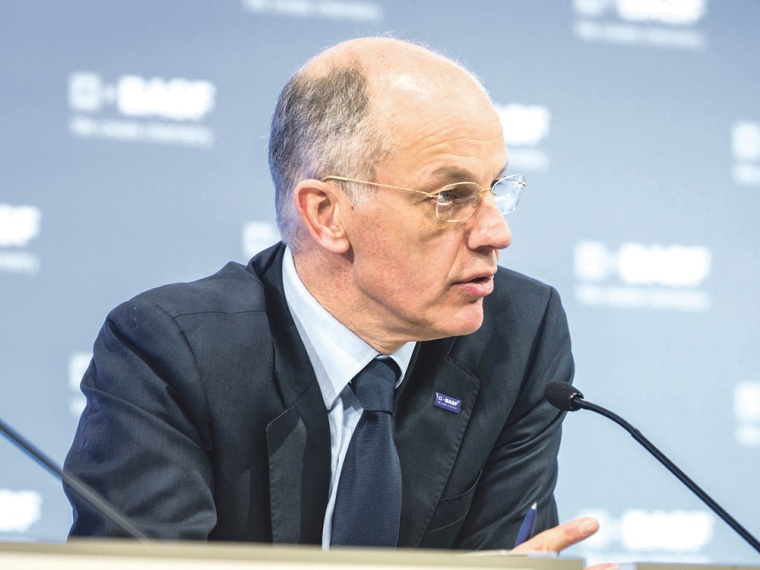
Addressing journalists, VCI president Kurt Bock, who is CEO of BASF, said member companies expect stable economic growth well into next year, especially for all foreign markets important to the German chemical industry. This applies not only to Europe, but includes the “most important trading partner, the USA.”
As an expression of confidence in the outlook, the association said companies now expect to invest “more than ever before” in production plants and machinery at their Germany-based production sites. Spending should reach roughly €7.5 billion, around 6.7% more than a year earlier. Investment in assets abroad is expected to be even higher, rising by 5.8% to €8.4 billion.
From January to June 2017, German chemical producers increased their sales by 5% year-on-year to nearly €97 billion. Volume sales improved in all production segments except petrochemical feedstocks, where they declined 3.5%. Capacity utilization rates rose to 87%, and producer selling prices added 3.5% against the 2016 period.
Looking ahead to German elections in September, the VCI president noted that the industry has seen “hardly any” concrete improvement in its competitiveness over the past four years and called on the political sector to follow up its pro-industry speeches with deeds.
To strengthen Germany’s position as a location for business, Bock said “more substance” is needed in industrial policy. As priorities, he listed caps on energy costs, more market in the transition to renewable energy and more state spending on research and development as well as a stronger emphasis on education. Education spending in Germany is “clearly below the OECD average,” and this raises concerns, he said.
The country’s transportation infrastructure also requires more attention, in the association’s view. The industry’s logistics experts are said to have identified problem zones around production sites that “should be tackled as priorities.”
Chemical producers also need faster data connections for digitalization, along with new business models and expansion of broadband coverage, Bock noted. This, he said, would especially benefit small and medium-sized chemical companies that are frequently located outside large urban centers. This is essential, he added, if they are to keep up with competitors in India and China.