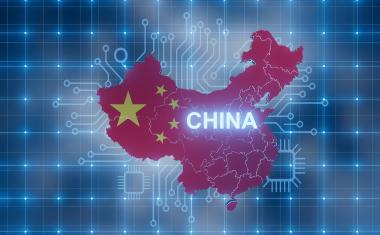
Digitalization of China’s Chemical Industry
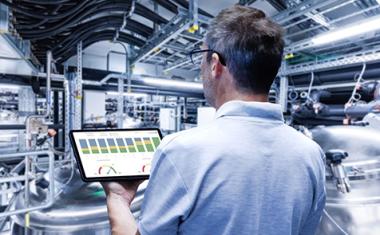
The digital and intelligent development of the petroleum and chemical industry is a major component of China's 15th five-year plan for chemicals.


The digital and intelligent development of the petroleum and chemical industry is a major component of China's 15th five-year plan for chemicals.
China’s chemical industry is diversifying markets, boosting innovation, and strengthening supply chains to counter US tariffs and maintain export resilience.
China’s chemical industry is diversifying markets, boosting innovation, and strengthening supply chains to counter US tariffs and maintain export resilience.

China’s chemical industry originally focused primarily on basic chemicals, in line with the domestic needs of a developing economy and the lower technology requirements for the production of these materials. By now, China dominates the global market for many such chemicals – for example, the country accounts for about 55% of the global capacity for acetic acid, about 50% of the global carbon black capacity and about 45% of the global capacity for titanium dioxide. For many such commodity chemicals, China started out as a net importer, then built up domestic capacity and ended up being a major exporter.

The Chinese chemical distribution market is very likely the largest in the world. To be successful in this competitive market, foreign distributors in particular need to consider some important aspects.

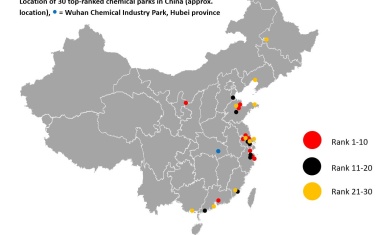
Historically, China’s chemical industry has mainly been located in coastal provinces, with Shandong as the biggest and Jiangsu as the second biggest province by chemical sales, while the coastal regions of Hebei, Tianjin, Zhejiang, Liaoning and Guangdong are also among the top ten producers of chemicals.

In 2021, the new patent law came into force in China. It represents a significant strengthening of protection against patent infringements.
One of China’s key objectives of the current 14th Five-Year Plan is to reduce the dependency on imports. At least partly, this is a reaction to rising political tensions with the USA.

It sometimes seems that everyone running a business always thinks that times are tougher now than they used to be. For producers — and buyers — of commodity chemicals, this thinking will take the more specific form of concerns about increased price volatility.

Chemical MNCs show strong verbal commitment to China, but the real situation is somewhat underwhelming.
Fu Xiangsheng, Vice Chairman of the China Petroleum and Chemical Industry Federation, characterized China`s chemical industry as having a a surplus of basic chemicals and a shortage of functional chemicals. Indeed, the share of fine chemicals as a percentage of the total industry value is only about 45% compared to 60-70% in the US and in many European countries, and 90% in Switzerland. Thus, the Chinese government is interested in supporting the development of local fine chemicals production.

Investment in the areas listed in the catalogue is supported by a variety of incentives.

China`s 14th Five-Year Plan (FYP) covering the period from 2021 to 2025 will only be published after its acceptance by the National People`s Congress in March 2021.

Why BASF Venture Capital is investing in SmartAHC, a supplier of digitalization solutions for pig farming on the Chinese market.

Like most industries, the global chemical industry is currently strongly affected by the outbreak of Covid-19.