Dr. Rainer Griesshammer on the Importance of Life Cycle Analysis for Chemical Companies
09.12.2011 -
-
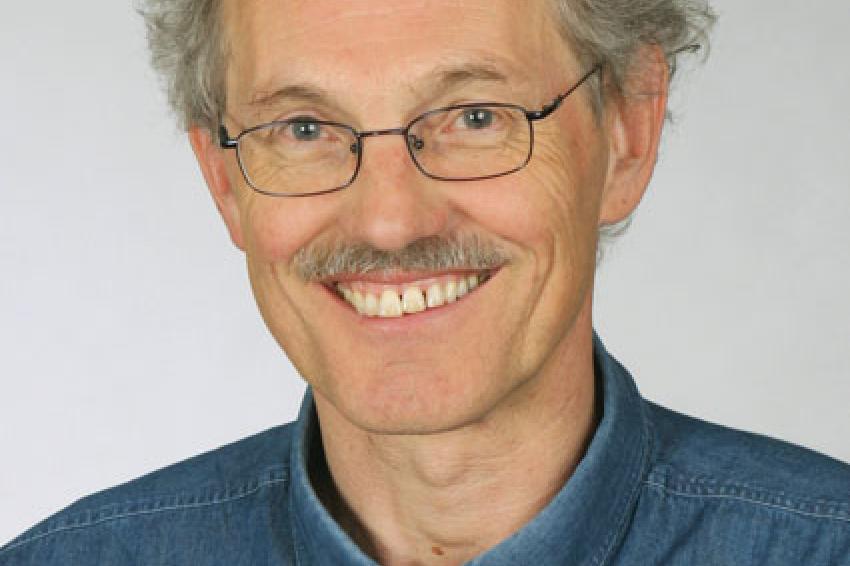 Dr. Rainer Griesshammer, Member of the Executive Board, Öko-Institut (Institute for Applied Ecology)
 -
 Sustainability assessments help a company to learn a lot about social processes and expectations and thus on future markets says Öko Institut’s Dr. Rainer Griesshamer. (© alphaspirit - Fotolia.com)
Great Benefit - The assessment of sustainability is widely discussed, yet sustainability analysis already provides a great benefit for companies. Dr. Andrea Gruss talked about this with Dr. Rainer Griesshammer, member of the executive board at the Öko-Institut in Freiburg, Germany.
CHEManager Europe: How can we analyze sustainability of a chemical product?
Dr. Rainer Griesshammer: For this purpose, the entire life of a chemical has to be tracked, from raw materials through production and application to recycling. The entire product life cycle should be analysed in terms of innovation potential, benefits, and ecological and economic impacts.
The chemical industry is doing this successfully for many of their innovative products: A prime example is the development of new materials for thermal insulation or light¬weight materials for automotive applications.
Is an analysis also carried out for the sustainability of chemicals whose benefits are called into question?
Dr. Rainer Griesshammer: The method PROSA - Product Sustainability Assessment - principally also analyses the benefit of products, which is the crucial factor in determining whether or not the product is successful on the market.
If there are negative social or environmental aspects, it is obviously important to know whether the benefits of the product are significant or not. This becomes particularly obvious in the EU chemicals legislation Reach, which requires a socio-economic analysis (SEA) for "substances of very high concern" on whether the social benefits can offset the disadvantages.
Another example: In spite of small amounts of mercury, energy-saving light bulbs are currently being promoted, and rightly so, as they save a lot of energy and electricity. This notion will be retained until the alternative - LED lamps - have become better and cheaper.
Since when have you been involved with the sustainability analysis at the Öko-Institut?
Dr. Rainer Griesshammer: We presented a study in 1986 on the product-line analysis in which we suggested evaluating products on the basis of their ecological, social and economic impacts throughout their entire life cycle.
Back then, however, the market was not ready for this innovative method. In contrast to the alternative method of LCA, PLA was only rarely used in the following years. This method only began gain acceptance in 1992, when the German Bundestag's Enquete Commission "Protecting People and the Environment" was established two years after the Rio Declaration on Sustainable Development. It took quite some time until the realization sank in that the entire product line needs to be evaluated.
A major breakthrough came with Öko-Insitut's co-operation with the former chemical group of Hoechst, which wanted to develop a company-specific method for the sustainable management of their product portfolio and products.
While fulfilling this task, essential elements of this product line analysis were integrated into the PROSA. PROSA considers the entire product line, analyzing and evaluating the ecological, economic and social opportunities and risks of future development pathways.
Since when have the social impacts also been analyzed within the assessment of products?
Dr. Rainer Griesshammer: About 10 years ago, we began to assess the social impacts of a product on an international level. This assessment included a wide variety of criteria, such as the wages of workers, abolition of child labor, the proportion of women in leadership positions, the possibility of co-determination for unions and much more.
Some of these data are easily quantifiable, while some of them are very difficult to determine. Besides, these criteria show a great diversity between regions and thus must be identified and separately evaluated for each region in which the product is produced or sold.
Where do you see shortcomings in today's sustainability analysis or rankings?
Dr. Rainer Griesshammer: Many assessments already evaluate a variety of criteria, such as the CO2 balance, the proportion of women in leadership positions, the corporate social responsibility activities or the supplier management of a company. In contrast, the evaluation of products or, in other words, the actual business performance, is only carried out partially and subordinately. Usually, only individual premium products are evaluated, but not the entire product portfolio.
Why is it important to assess the entire portfolio?
Dr. Rainer Griesshammer: I can give you an example: At the beginning of the Dow Jones Sustainability Indices, BMW ranked best, although the company's strategy was to build fast, big cars. From a sustainability perspective, this is not a successful concept in the medium term. If the entire portfolio had been evaluated at that time, the product development probably would have started earlier and the E models would have reached the market earlier, too.
Accordingly, sustainability assessments can have a high strategic value for companies?
Dr. Rainer Griesshammer: Yes, sustainability assessments help a company to learn a lot about social processes and expectations and thus on future markets. Even those who do not think much of sustainability should carry out a sustainability analysis, if only for their own econo¬mic benefits and the financial position of their company.
Hence, those companies which not only have their mega-trend or sustainability analysis carried out by specific departments, but where the issue has become part of the everyday corporate life, i.e. in the context of procurement, supplier management or product development, are particularly effective.
Can even smaller companies afford to analyze their product portfolio?
Dr. Rainer Griesshammer: In most cases, sure. That specifically depends on how many products they produce. A large corporation like BASF manufactures over 30,000 products. A small chemical company, however, has sometimes only two or three main products, which account for 70% of sales. The relative expenditure is not so much higher than that of large compa¬nies. The situation is different for small businesses that sell hundreds of products.
Specifically for small and medium enterprises, we have developed a simplified PROSA analysis in which the main sustainability criteria are translated into questions. By answering these questions, you will often quickly realize without a detailed analysis: Where are the critical points? Where are more efforts required in terms of a due analysis before a product can be developed? A simple PROSA analysis costs between €20,000 and €30,000. This money is wisely invested in order to spur innovation and to avoid mistakes.
What do you think are the greatest challenges in the assessment of sustainability?
Dr. Rainer Griesshammer: There is no such thing as an objective evaluation of sustainability assessments. The area, where this succeeds best is ecology. In this field, universally accepted evaluations for LCAs gain ground.
Even though one would not reasonably expect it, it is quite difficult to handle comparability of economic assessments. This is the result of many different assumptions and presupposi¬tions that play a role in this process, such as: What resources do I use and which price do I charge for them? What is the rate of remuneration that I will get for my investment? What is the appropriate time period to which I have to refer? Do I have to take into account external costs or not? Do I carry out the analysis from the point of view of the customer, the user or the company? Hence, the uncertainties are much larger than for the environmental area.
In addition: The assessment of social assessments will always be linked to societal values. All this is contrary to an objective evaluation of sustainability assessments, but does not impair their usefulness for the development and optimization of products or a business strategy.
Contact
Öko-Institut e.V.
Merzhauser Str. 173
79100 Freiburg
Germany
+49 0761/45295-250
+49 761/45295-288